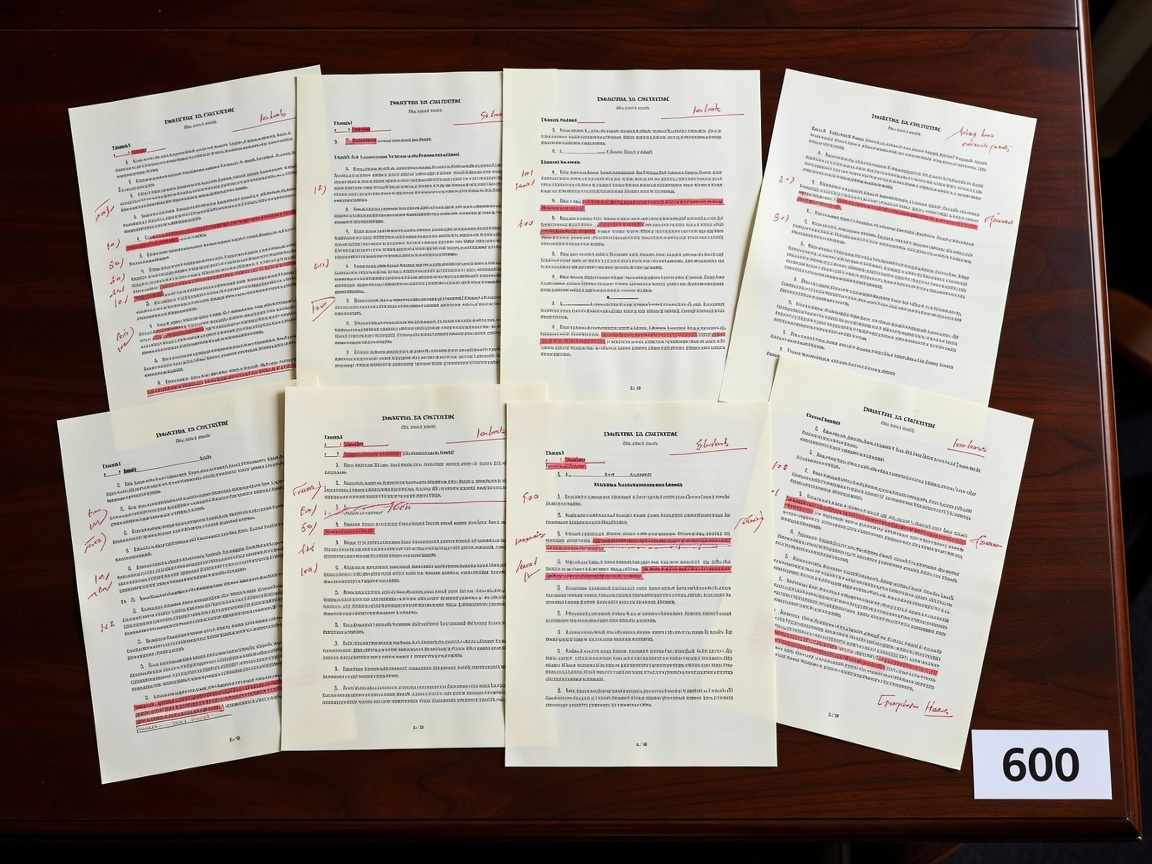
The Legal Operational Challenge
In routine enterprise growth, mergers, or supply chain renegotiations, thousands of active contracts sit in siloed PDF repositories. Traditional keyword search tools reliably locate boilerplate sections like "Severability" or "Notices", but fail to perceive how non-standard wording modifies actual economic risk:
- Mutual vs. Unilateral Indemnity Shifts: Subtle passive sentence constructions that shift uncapped consequential damages back to the enterprise.
- Hidden Assignment Clauses upon Change of Control: Conditions requiring commercial counterparty written consent during acquisitions or reorganizations.
- Dynamic Service Level Agreement (SLA) Penalties: Intricate multi-tiered rebate matrices that contradict parent master agreement limits.
Claude's Nuanced Legal Linguistics Model
Claude architectures excel in syntactic analysis and legal precision due to rigorous training on nuanced logical structures. Rather than performing simple pattern matching, the cognitive layer executes an analytical review:
- Party Role Normalization: Reconciles whether "Purchaser", "Customer", "Company", or "Affiliate" bears the operational burden for each discrete requirement.
- Cross-Agreement Harmonization: Simultaneously reviews the Master Services Agreement (MSA), Statements of Work (SOWs), and Data Processing Addenda (DPAs) to detect conflicting precedence clauses.
- Deviation Grading: Scores individual clauses against corporate fallback libraries, highlighting deviations as Green (conforming), Amber (acceptable concession), or Red (strict executive review mandatory).
| Contract Clause Area | Standard Playbook Position | Claude Extraction & Detection Focus |
|---|---|---|
| Limitation of Liability | 12 months aggregate fees paid; mutual waiver of consequential damages. | Identifies carve-outs for data security breaches, uncapped intellectual property indemnity, and gross negligence terms. |
| Termination for Convenience | 30 days written notice without penalty or early termination fees. | Flags prepaid non-refundable retainer conditions, minimum commitment lock-ins, and multi-year rollover traps. |
| Governing Law & Forum | Delaware Court of Chancery or London Commercial Court. | Detects distant jurisdictions, mandatory arbitration clauses with non-standard rules, and fee-shifting stipulations. |
Comparative Evaluation: Specialized CLM vs. LLM Legal Orchestration
LLM Orchestration Strengths
- Adapts immediately to ad-hoc contract structures without custom model training.
- Provides natural language rationale explaining why a specific clause creates liability.
- Generates redlined alternative drafting suggestions directly tailored to corporate fallback guidelines.
Governance Requirements
- Must be paired with human legal counsel oversight; never operates as autonomous legal representation.
- Requires strict non-retention agreements to preserve client attorney-client privilege.
- Sensitive to optical character recognition (OCR) transcription quality in legacy scanned documents.
Security and Ethical Guardrails
Deploying AI inside legal workflows necessitates adherence to the highest confidentiality standards. Reelpockshowmeadow frameworks utilize zero-data-retention API configurations wherein input tokens and contractual texts are completely excluded from foundational model training passes.